All Books
Recent books authored or edited by Andrews University Faculty
-
![Towards a New History of San Miceli (Salemi–Trapani): Preliminary Results of the Excavation Campaign 2014-2015 [translated title] by Randall Younker and Elisabeth Lesnes](https://digitalcommons.andrews.edu/books/1020/thumbnail.jpg "Towards a New History of San Miceli (Salemi–Trapani): Preliminary Results of the Excavation Campaign 2014-2015 [translated title] by Randall Younker and Elisabeth Lesnes")
Towards a New History of San Miceli (Salemi–Trapani): Preliminary Results of the Excavation Campaign 2014-2015 [translated title]
Randall Younker and Elisabeth Lesnes
Co-edited by Randall W. Younker and Elisabeth Lesnes.
Original tite: Sicilia Archeologica, 108/2016. Rassegna di notizie, documentazioni e studi archeologici. Verso una nuova storia di San Miceli (Salemi-TP). Risultati preliminari delle campagne di scavo 2014-2015. a cura di Elisabeth Lesnes e Randall W. Younker. Sicilia Archeologica, 108/2016.
Rassegna di notizie, documentazioni e studi archeologici. Verso una nuova storia di San Miceli (Salemi-TP). Risultati preliminari delle campagne di scavo 2014-2015. a cura di Elisabeth Lesnes e Randall W. Younker.
-
Land of Rameses
L. S. Baker
Land of Rameses is an epic historical-biblical mystery novel in which Pharaoh, while navigating the political intrigue of his inner circle of advisers in order to expand his empire, must first decode his father’s cryptic dying words: “Beware of Ramoses!”
It is the Exodus story you know and love, told as you’ve never read and faithful to the Bible and Egyptian Archaeology in a way you’ll never forget. Land of Rameses reveals the secret to ultimate triumph following abject failure. It is the story of the struggle we all have to endure in order to either suppress or succumb to the pressure of outside forces on our lives. (From publisher site)
-
Biblical Principles for Missiological Issues in Africa
Bruce Bauer and Wagner Kuhn
Students from Kenya, Tanzania, Rwanda, Burundi, Zimbabwe, Zambia, Nigeria and Brazil were part of an Andrews University Doctor of Ministry cohort that met at the Adventist University of Africa from 2011 to 2014. Chapter two in their dissertations focused on biblical principles that spoke to current cultural and ministry issues. Many of these chapters are shared with a wider audience in this book.
-
Biblical Principles for Missiological Issues in Africa
Bruce L. Bauer and Wagner Kuhn
Students from Kenya, Tanzania, Rwanda, Burundi, Zimbabwe, Zambia, Nigeria and Brazil were part of an Andrews University Doctor of Ministry cohort that met at the Adventist University of Africa from 2011 to 2014. Chapter two in their dissertations focused on biblical principles that spoke to current cultural and ministry issues. Many of these chapters are shared with a wider audience in this book.
-
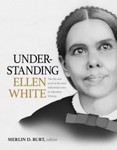
Understanding Ellen White: the Life and Work of the Most Influential Voice in Adventist History
Merlin D. Burt
The Seventh-day Adventist Church has become a truly global movement with almost twenty million members from diverse cultures and backgrounds; many of whom are unfamiliar with the history of God s leading and the prophetic ministry of Ellen White. While it does not attempt to provide the final answer for every question, Understanding Ellen White builds a foundation for interpreting her experience with God and her ministry. Basic to any understanding of Ellen White is her own walk with God. Two golden threads weave throughout her life and experience and are central to who she was and what she accomplished: the love of God in Christ and a focus on Scripture. When these two principles are correctly understood and integrated in examining Ellen White s life and experience, then all other issues addressed in this book are put in perspective. Perhaps the saddest reality regarding Ellen White s writings is that many dismiss them as irrelevant even before reading her work. A Kellogg s Corn Flakes advertisement from several years ago is apropos when applied to Ellen White s writings and ministry: whether you have lived with her writings your whole life or have never read her, the invitation is to taste them again for the very first time.
-
Private Universities in Latin America: Research and Innovation in the Knowledge Economy
Gus Gregorutti and Jorge Enrique Delgado
Using policy analysis and case study approaches, Private Universities in Latin America examines the significant amounts of research and innovation being made available from private universities in Latin America. (From publisher)
-
Questions and Answers About Women's Ordination
Martin Hanna and Cindy Tutsch
In Questions and Answers About Women's Ordination, Martin Hanna, PhD and Cindy Tutsch, Dmin take an indepth look at this much discussed issue of women's ordination in the Seventh-day Adventist church. Here is what many thought leaders in the church have to say about this work:
I believe the Spirit of God has guided our community of faith into a prayerful, collective study of the role of women in gospel ministry. While church commissions and committees have already invested hundreds of hours in the study, this book's concise and clear Q & Q presentation will be an invaluable aid to all of us who seek God's will for our third millennial church. -- Dwight K. Nelson, Senior Pastor, Pioneer Memorial Church, Andrews University
I believe that the editorial team for this book has been used mightly by God to provide an invaluable resource for the church. I highly recommend this work to all who are seeking solid, satisfying, biblically based answers to the key questions related to women's ordination. -- Richard M. Davidson, J. N. Andrews Professor of Old Testament Interpretation, Seventh-day Adventist Theological Seminary, Andrews University
If you are looking for understandable answers to the question of why Bible-believing Adventists support the ordination of women to pastoral ministry, this book is a great place to start. -- Teresa L. Reeve, Associate Dean and Associate Professor of New Testament Contexts, Seventh-day Adventist Theological Seminary, Andrews University.
-
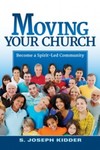
Moving Your Church
S. Joseph Kidder
Moving Your Church was written to encourage and equip members and leaders to successfully carry out the vision and mission of Christ in their local community.
-
He Spoke and It Was: Divine Creation in the Old Testament
Gerald Klingbeil
The Bible opens with a statement that forms the basis of our faith:
“In the beginning God created the heavens and the earth” (Genesis 1:1, NIV). This is the foundation of all biblical theology, because it tells us that life began when a Creator spoke it into existence. This is where we encounter the God whose power is matched only by His love for His creation.
He Spoke and It Was: Divine Creation in the Old Testament is the result of an interaction between Seventh-day Adventist Bible scholars, scientists, and educators. Listening to one another, they engaged contemporary science and biblical scholarship constructively on this important issue. The book is the first volume in a series characterized by engagement with the biblical text itself with the aim of helping both scientists and interested non specialists to grasp the significance of biblical Creation, its terminology, and theology.
At its core, Creation is all about who we are, what our destiny is, and how God chooses to save a world that is in direct rebellion with its Creator. For the God of creation is also the God of salvation, and He will ultimately re-create an earth that has been corrupted by thousands of years of sin. The Creation account contains an echo of hope that rings through the centuries—and keeps tugging at our hearts. (From ABC website)
-
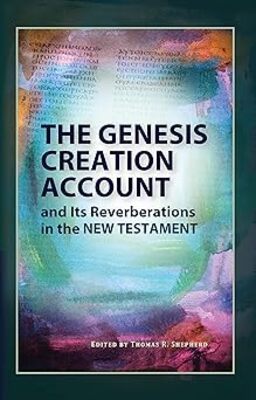
The Genesis Creation Account and Its Reverberations in the Old Testament
Gerald A. Klingbeil
How does the rest of the Bible relate to Genesis 1 and 2? Do the various biblical authors portray creation theologies that align or diverge? In this volume, ten scholars—each addressing a different section, genre, or topic from the Old Testament—grapple seriously with this question. Collectively, they find that the weight of the textual data of the Old Testament clearly portrays an overarching understanding and theology of creation that permeates every biblical genre and book. These findings should inform the thinking of every honest Christian, whether layperson, theologian, or scientist. At its core, creation theology is all about Who God is, who we are, what our destiny is, and how God chooses to save a world that is in direct rebellion to its Creator.
-
Connectivity in Antiquity : Globalization As a Long-Term Historical Process
Oystein S. LaBianca and Sandra Arnold Scham
Today's politicians argue that the more 'connected' societies are the less danger they pose to global stability. But is this a 'new' idea or one as old as history itself? Trade routes as far back as prehistory were responsible for the exchange of ideas as well as goods, leading to the rapid expansion of states and empires. 'Connectivity in Antiquity' brings together a team of influential scholars to examine the process of globalization in antiquity. The essays examine metallurgy, social evolution, economic growth and the impact of religious pilgrimage, and range across the eastern Mediterranean, Syria, the Transjordan, south Yemen, and Egypt. 'Connectivity in Antiquity' will be of value to all those interested in the relationship between antiquity and modern globalization.
-
Church and Society: Missiological Challenges for the Seventh-day Adventist Church
Rudi Maier
The purpose of this book - written by 34 dedicated Christian scholars and community practitioners - is to help Christ's church to understand how this "world" and the people who live in it think, feel and react to some of the issues they face in their daily lives, and how to bring peace, justice and compassion to the society that sorrounds our homes, churches, and communities.
-
Church and Society: Missiological Challenges for the Seventh-day Adventist Church
Rudi Maier
The Church has a reservoir of wisdom and truth in the Bible, and a role to play in witnessing to that truth. The Bible is full of mandates and challenges that ask us, the disciples of Jesus Christ, to “Make our light shine, so that others may see our good works and give glory to our God in heaven” (Matt 5:16). The purpose of this book—written by 34 dedicated Christian scholars and community practitioners—is to help Christ’s church to understand how this “world” and the people who live in it think, feel, and react to some of the issues they face in their daily lives, and how to bring peace, justice and compassion to the society that surrounds our homes, churches, and communities. Jesus says, “Blessed are the peacemakers, for they shall be called children of God (Matt 5:9).” Shalom, which we translate as peace means more than the absence of conflict. To live in shalom, as a peacemaker, means we actively live our lives in a way that brings healing, wholeness, harmony and well being to the lives of people we meet. This is not a prescriptive book that will provide answers to all the social and missiological woes in society (though there will be some guidelines for how to start various ministries). Instead, the authors have attempted to describe some of the problems that exist in our societies and churches and have encouraged the readers as individuals, as well as groups, to find their own answers to many of the issues raised. Some of the issues raised will not be comfortable to discuss in Church circles, but we all hope that they will be treated with the same respect and compassion that Jesus gives in response to each one of our needs.
-
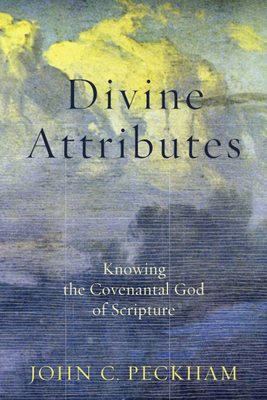
The Love of God: A Canonical Model
John C. Peckham
"For God so loved the world . . ."
We believe these words, but what do they really mean? Does God choose to love, or does God love necessarily? Is God's love emotional? Does the love of God include desire or enjoyment? Is God's love conditional? Can God receive love from human beings?
Attempts to answer these questions have produced sharply divided pictures of God's relationship to the world. One widely held position is that of classical theism, which understands God as necessary, self-sufficient, perfect, simple, timeless, immutable and impassible. In this view, God is entirely unaffected by the world and his love is thus unconditional, unilateral and arbitrary.
In the twentieth century, process theologians replaced classical theism with an understanding of God as bound up essentially with the world and dependent on it. In this view God necessarily feels all feelings and loves all others, because they are included within himself.
In The Love of God, John Peckham offers a comprehensive canonical interpretation of divine love in dialogue with, and at times in contrast to, both classical and process theism. God's love, he argues, is freely willed, evaluative, emotional and reciprocal, given before but not without conditions. According to Peckham's reading of Scripture, the God who loves the world is both perfect and passible, both self-sufficient and desirous of reciprocal relationships with each person, so that "whoever believes in him shall not perish, but have eternal life."
-
Women and Ordination: Biblical and Historical Studies
John W. Reeve
"It is the accompaniment of the Holy Spirit of God that prepares workers, both men and women, to become pastors to the flock of God." Ellen G. White, Testimonies for the Church, vol. 6, p. 322. "The biblical understanding of ordination is not that the act changes those who are set aside, but only that the church is acknowledging what God has already done by equipping them through the gifts of the Spirit." Jiri Moskala, dean, SDA Theological Seminary. "Women's ordination to ministry does not violate the preservation of God's name, neither His precepts written in the Holy Scriptures. Only two factors can limit the decision of the Adventist Church in favor of women's ordination: avoiding scandal and the hindrance of the evangelizing mission to the world." Natanael B. P. Moraes, professor of applied theology, Adventist University of São Paulo, Brazil.
-
An Understanding of the Biblical View on Homosexual Practice and Pastoral Care: Seventh-day Adventist Theological Seminary Position Paper
Seventh-day Adventist Theological Seminary
The intent of this document is not to judge but to clearly set forth what Scripture teaches concerning homosexual practices and offer guidelines on how to interact with persons of same-sex orientation.
-
Euclidean Geometry and its Subgeometries
Edward John Specht, Harold Trainer Jones, Keith G. Calkins, and Donald H. Rhoads
In this monograph, the authors present a modern development of Euclidean geometry from independent axioms, using up-to-date language and providing detailed proofs. The axioms for incidence, betweenness, and plane separation are close to those of Hilbert. This is the only axiomatic treatment of Euclidean geometry that uses axioms not involving metric notions and that explores congruence and isometries by means of reflection mappings. The authors present thirteen axioms in sequence, proving as many theorems as possible at each stage and, in the process, building up subgeometries, most notably the Pasch and neutral geometries. Standard topics such as the congruence theorems for triangles, embedding the real numbers in a line, and coordinatization of the plane are included, as well as theorems of Pythagoras, Desargues, Pappas, Menelaus, and Ceva. The final chapter covers consistency and independence of axioms, as well as independence of definition properties. There are over 300 exercises; solutions to many of these, including all that are needed for this development, are available online at the homepage for the book at www.springer.com. Supplementary material is available online covering construction of complex numbers, arc length, the circular functions, angle measure, and the polygonal form of the Jordan Curve theorem. Euclidean Geometry and Its Subgeometries is intended for advanced students and mature mathematicians, but the proofs are thoroughly worked out to make it accessible to undergraduate students as well. It can be regarded as a completion, updating, and expansion of Hilbert's work, filling a gap in the existing literature. (from publisher website)
-
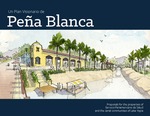
Un Plan Visionario de Peña Blanca: Proposals for the Properties of Servicio Panamericano de Salud and the Canal Communities of Lake Yojoa
The 2014 Urban Design Studio, Andrew C. von Maur, and Martin Smith
This document was commissioned by and prepared for Pan American Health Services, Inc. (PAHS) - a non-denominational Christian, non-government organization operating in Peña Blanca, Honduras. Founded by Dr. Stephen Youngberg near the northern shore of Lake Yojoa, PAHS has been successfully providing nutrition and educational outreach for the hungry, sick, and homeless since 1960.
PAHS has a strong historical record of fighting disease, ignorance, and poverty, with a special focus on children, nutritional rehabilitation and education. Today more than 80 boys and girls live in the children’s home on the PAHS campus and more than 200 adolescents are enrolled at the Dr. Stephen Youngberg Technical Vocational Center.
Some of the challenges facing northwestern Honduras have changed since 1960, but PAHS remains committed to “doing what we can with what we have” in order to uplift the health and welfare of local people.
Pan American Health Services, Inc. owns approximately 250 acres of land located just southeast of the town of Peña Blanca. The northwestern boundary of the property is shaped by a hydroelectric canal, which flows north and was built a few years after the establishment of the PAHS campus. The campus still features several wooden buildings that were purchased from the canal’s construction company after work on the canal was completed. Campus buildings were conceived to surround an ordered plaza, as laid out with a rope by Verlene Youngberg. This beautifully landscaped, garden-like plaza continues to be the functional, social, and symbolic heart of campus.
This group of buildings is surrounded on all sides by gardens, orchards, a bird sanctuary, and agricultural fields. Just north of the nearby village of El Edén are former rice terraces overlooking the spectacular Santa Barbara Mountains. Now used to grow beans and corn for PAHS, this southern portion of the site is bound to the west by the road leading to Lake Yojoa and the Eco-Archeological Park “Los Naranjos” - only 2 km away. To the north, across the road that leads to La Guama and the country’s main highway CA-5, lies more hilly agricultural terrain leading up to the village of El Tigre. This is also the location of the Dr. Stephen Youngberg Technical Vocational Center.
The purpose of this document is to outline a vision for how this land can serve the mission and long-term interests of PAHS, but also the well-being of the surrounding community.
-
Shame & Honor: Presenting Biblical Themes in Shame and Honor Contexts
Bruce L. Bauer
Most Christian theology is framed in terms of Guilt/Innocence which people from an individualistic Western context have an easy time relating to. However, the peoples in the 10/40 Window and those in the major world religions would hear the gospel more clearly if it was expressed and framed in terms of God taking our shame and giving us his honor.
From September 19-21, 2013 almost one hundred theologians, missiologists, and field practitioners gathered at Andrews University for a conference dealing with the challenge of presenting biblical theme in Honor/Shame contexts. This book shares the conference presentations with a larger audience. -
Servants and Friends: A Biblical Theology of Leadership
Skip Bell
Against the chatter of pop psychology and the latest list of must-have motivational habits, twenty Bible scholars and ministry professionals thoughtfully grapple with what the Scriptures, in their totality, actually have to teach us about the essence of true leadership. In Servants and Friends, Skip Bell and his team examine and correlate the breadth of evidence in the Old and New Testaments. They trace the nature of God's intent, and bring it all together in a fresh and challenging theological understanding that may radically alter what we have thought leadership really is.
-
Adventist Evangelistic Preaching
Russell C. Burrill
Whether you've preached hundreds of evangelistic sermons or you're preparing for your first, you'll find Adventist Evangelistic Preaching invaluable in making your presentations more persuasive, practical, and effective. In this book, Russell Burrill, veteran soul winner and evangelist, lays out the lessons he has learned over decades of evangelistic preaching and leads the reader, step by step, through every aspect of the evangelistic process from sermon preparation to calling for decisions.
-
Drinking at the Sources
Jacques B. Doukhan
The schism between Israel and the Christian Church is rooted in the most profound reality in history.
When Jesus said that He was the Messiah, was His contention not to have consequences in a land occupied by Roman legions since 66 B. C.? In a land where leaders of resistance movements had regularly been proclaimed king and Messiah by their troops? Alas, messianic adventures were not uncommon in those times! Many of them ended in atrocious massacres.
Drinking at the Sources separates historical fact from fiction in an attempt to discover what was responsible for the hatred between early Christians and Jews that carries on to this day. It seeks to identify, from each side’s viewpoint, the decisive factors and arguments both sides have used in constructing seemingly insurmountable walls.